









ABC - National News

Bryan Kohberger's family says they support his attempt to challenge conviction

In this July 23, 2025, file photo, Bryan Kohberger appears at the Ada County Courthouse for his sentencing hearing in Boise, Idaho. (Kyle Green, Pool via Getty Images, FILE)

(NEW YORK) -- The family of Bryan Kohberger is supporting his efforts to challenge his 2025 conviction, saying in a statement exclusive to ABC News, "Our full support of Bryan’s decision to pursue post-conviction relief does not come from a place of disregard.”

Kohberger, who is currently serving four consecutive life sentences for killing four college students in Idaho, said in his petition that the circumstances of his plea deal are now suspect because, among other things, he was “convinced to falsely confess” to a crime he says he did not commit.

“My actual innocence is my truth, and the plea, hinged on by false promises and blatant disinformation, MUST be withdrawn,” he said in a statement to the New York Times last month.

Kohberger's family told ABC News that they did not want their support of their son "to compound the unimaginable grief the families have borne so courageously."

"Rather, it comes from our family’s need to see that the complete and unvarnished truth is told. Like everyone, we seek answers to all the questions that have been raised, which can only be addressed through a proper trial, as opposed to an improper plea,” the Kohberger family said.

“As a family, we continue to carry the victims, their families, and the entire Moscow community in our hearts and daily prayer,” they added. “We continue to love and support Bryan and we continue to respect the memory of those lost. We seek to find justice and a conclusive resolution through the legal process.”

This month, Bryan Kohberger also requested a new judge to oversee the process, saying comments made by Judge Steven Hippler during his sentencing showed bias. Hippler said he could identify nothing redeeming about Kohberger because his conduct had buried anything "good or intrinsically human," and he called him "the worst of the worst." Kohberger’s motion also asks for his case to be moved back to Latah County, where the killings took place.

A hearing regarding his request for a new judge and location is scheduled for Oct. 15. A hearing to address his motion for post-conviction relief is set for June 17, 2027.

Last year, Kohberger, a former doctoral student in criminal justice, admitted he killed four college students in an off-campus house in Moscow, Idaho, on Nov. 13 2022. In addition to the life sentences, he received 10 years in prison for a burglary charge. The case received international media attention. Kohberger never explained or gave a motive for the killings.

By filing that brief handwritten petition, Kohberger is putting himself in the category of many criminal defendants before him, who have argued after the fact that their guilty pleas were coerced.

“It is not impossible but not common to have a plea deal returned after a conviction is final,” said Andrea Lewis Hartung, director of Northwestern University’s Center on Wrongful Convictions.

“People accept guilty pleas for all kinds of reasons, not necessarily because they were guilty,” she said. Oftentimes, she said, it is because they “don’t want to take the chance of having such a harsh punishment or were offered lesser charges.”

“A lot of consideration is 'what is the worst case scenario that will happen if you lose.' Whereas if you take a plea, you’ll have a guaranteed result or at least guarantee that you won’t have as harsh of a punishment,” she said.

Under Idaho law, first-degree murder is a crime that can be punished by death or life imprisonment. Prosecutors made it clear early in pre-trial hearings that they intended to seek capital punishment.

Plea deals are often attractive for attorneys to avoid trial. In fact, in any given year, 98% of criminal cases in federal courts end with a plea bargain, according to the American Bar Association. Yet according to the National Registry of Exonerations, about 28% of all exonerated people across the United States since 2014 pled guilty to crimes they did not commit. Likewise, the Innocence Project shows that about 12 percent of known DNA exoneration cases involved an innocent person who pled guilty.

Kohberger’s court-appointed lawyers, led by Coeur d’Alene-based attorney Ann Taylor, spent more than two years challenging evidence during pre-trial hearings. Despite Kohberger’s insistence that he was not guilty throughout the process, his plea deal was announced shortly before his trial was scheduled to begin.

In his new petition, Kohberger claims his lawyers pressured him into the deal with false promises. He said his court-assigned defense team failed to disclose or review exculpatory evidence during discussions and, despite his insistence that he was innocent, he said his attorneys told him that it was legally okay to submit a false guilty plea.

Kohberger “took the plea because he was frightened out of his mind,” Dr. Brent Turvey, a forensic criminologist hired by Kohberger’s legal team to analyze the crime scene, told ABC News. “His lawyers told him it’s okay to lie to the court. His family was used to induce him to take the plea. He didn’t know the strength of his own case.”

Turvey said Kohberger and his family were not given enough knowledge of the case the defense team had built before he pleaded guilty. Turvey explained his report, provided to the defense lawyers, included more evidence that supports Kohberger’s innocence.

Had he had the chance to testify for Kohberger, Turvey said he would have told a jury he was troubled by how investigators documented evidence in the house where the victims were found. He said police did not properly handle the knife sheath after they found it – so much so it should have been ruled inadmissible at trial. Turvey also said, “the hair evidence points to someone else” because FBI analysis “excluded Kohberger.”

He also said video and cell tower data that was used to place Kohberger in the vicinity of the murder scene around the time the killings occurred “has no value or meaning.”

“College students drive around all the time. That’s normal behavior,” Turvey said. “What's really interesting is turning off the cell phone; it is riddled throughout his cell phone behavior. He’ll turn it off and drive around. Why? He’s a college student who doesn’t want to be bothered. You ignore the behavior of real people.”

Ann Taylor did not respond to ABC News' request for comment.

Jason Goldman, one of Kohberger’s new defense attorneys, said plea deals can be thrown out “by bringing evidence to support the notion that you were coerced into accepting a plea through false promises, misrepresentations, or through undue duress.”

“Oftentimes, these very psychological methods could have been employed by an individual’s own counsel, justifying a court’s decision to allow a person to withdraw their plea,” he told ABC News.

“Many individuals take a plea deal even when they are otherwise innocent or believe the evidence against them is weak. Sadly, it becomes less about facts, guilt, or innocence and more about a business decision and being risk-averse,” he said.

Idaho Attorney General Raúl Labrador released a statement following Kohberger’s petition, saying only that he had sympathy for victim families “who have already endured unimaginable loss” and who now “must face today’s deeply painful news.”

“My office stands ready to do whatever is necessary to ensure justice is fully carried out,” he said.

Copyright © 2026, ABC Audio. All rights reserved.
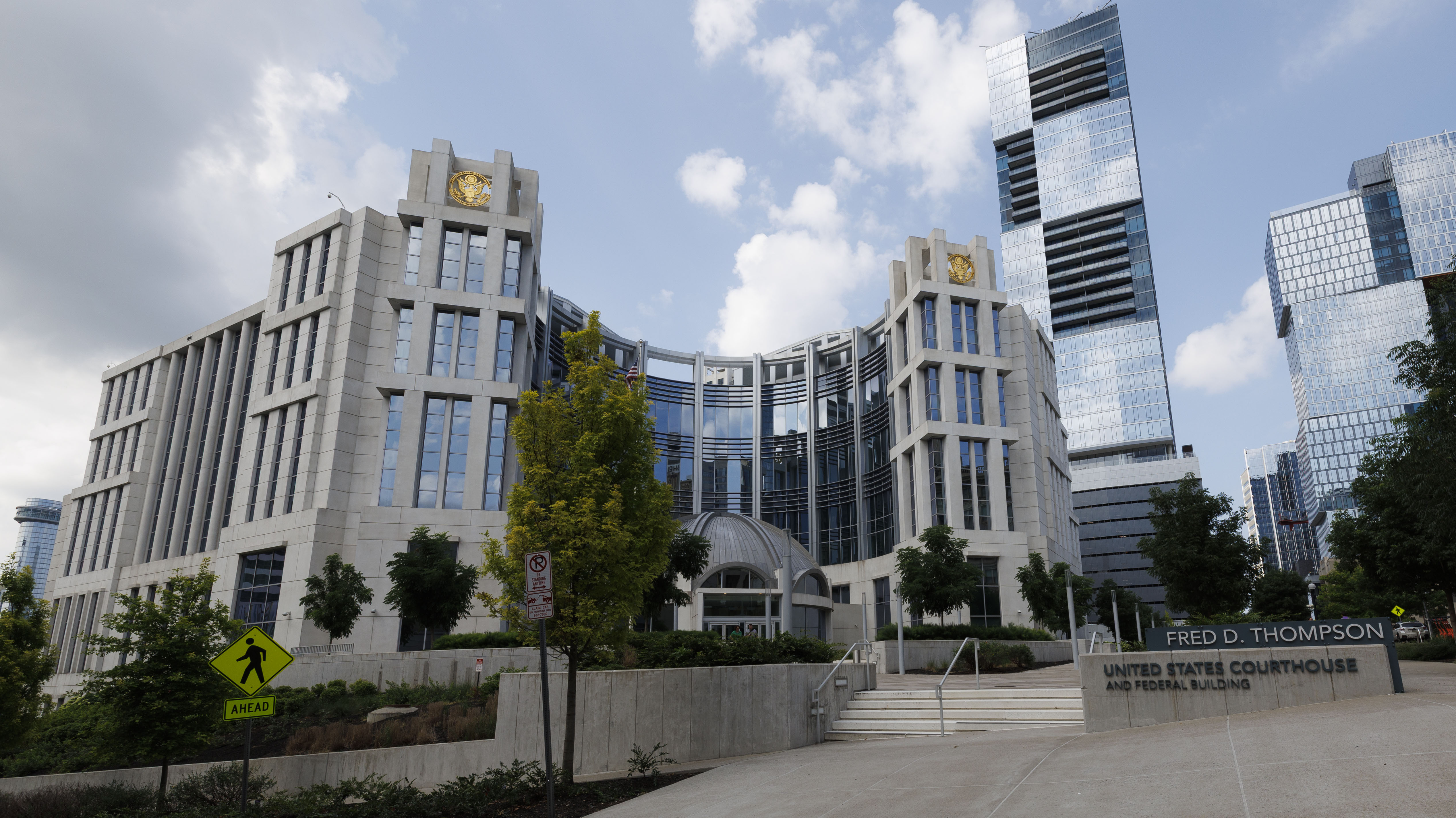

Popular frozen dessert voluntarily recalled due to potential presence of stones

Danone USA is voluntarily recalling So Delicious Dairy Free Salted Caramel Cluster Non-Dairy Frozen Dessert pints because of the potential presence of small stones and other hard objects. (FDA)

(NEW YORK) -- It might be time to check your freezer. Danone USA is voluntarily recalling one of its popular frozen dessert offerings due to what the company said is the potential presence of foreign objects.

The food company announced this week that it is recalling pints of So Delicious Dairy Free® Salted Caramel Cluster Frozen Dessert "out of an abundance of caution" because they may be contaminated with “small stones and other hard objects, within the cashew inclusions.”

Danone USA said it had received complaints from customers and notified the Food and Drug Administration of the recall.

Recalled frozen desserts bear the UPC number of 744473476138 and have best-by expiry dates on and before April 3, 2028.

Customers are being advised not to eat any recalled frozen desserts and to throw them away. Those affected by the recall can request a refund or a coupon for a replacement product from the So Delicious Dairy Free® Consumer Care Line at 1-833-367-8975, available Monday through Friday from 9 a.m. to 6 p.m. ET, or through the So Delicious website.

Other So Delicious frozen desserts and products are not impacted by the recall, the company said on its website.

"We know this is not the quality you expect from us," the brand shared on its website. "So Delicious Dairy Free® is working swiftly with retail partners to remove the impacted product from shelves. In the meantime, we have identified and corrected this issue and will soon be able to bring the product back to market safely."

Danone USA said recalled frozen desserts were distributed to retailers nationwide and that it is working with stores to remove recalled products.

ABC News has reached out to Danone USA for additional comment.

Copyright © 2026, ABC Audio. All rights reserved.


House votes to hold Leon Black in contempt of Congress in Epstein probe

Former CEO of Apollo Global Management Leon Black arrives to testify at a closed-door interview with the House Oversight Committee on Capitol Hill on June 26, 2026, in Washington, D.C. (Kevin Dietsch/Getty Images)

(WASHINGTON) -- The House of Representatives unanimously adopted a resolution Wednesday to hold billionaire Leon Black in contempt of Congress for defying two subpoenas issued in the House Oversight Committee's probe of convicted sex offender Jeffrey Epstein.

The resolution came a day after the Oversight Committee voted 41-0 to hold Black in contempt, teeing up the House vote.

Black bucked a committee subpoena calling on him to testify under oath at a closed-door deposition on Sept. 3, as well as turn over nondisclosure agreements that the committee is seeking under subpoena, as part of the panel's ongoing probe into the government's handling of the investigations into Epstein. 

Black, who maintained a social relationship with Epstein since the mid-1990s and eventually paid him more than $170 million for "tax and estate planning advice," according to the Senate Finance Committee, appeared voluntarily before the Oversight panel in June -- before prematurely leaving the closed-door interview.

Black has denied wrongdoing or knowledge of Epstein's crimes, though his financial payments to the convicted sex offender served as a lifeline in the years following Epstein's 2008 prison sentence for soliciting a minor for prostitution.

Moments before the House unanimously approved the measure, Rep. Robert Garcia, the ranking Democrat on the Oversight panel, told reporters that the move to hold Black in contempt is "a very important step" in the committee's Epstein probe. 

"This is an important step towards justice, but there is just an enormous amount of work to be done," Garcia said. "Our investigation is just getting started. There is a massive cover-up that's happened at the White House from Day 1, and we need to have more actions like the one that's going to happen today. So this is a really important day for us."

Black's attorneys called the move "outrageous" and said they will fight the resolution.

"The Committee has continued to insist on looking for information that does not exist," said attorneys Susan Estrich and Aaron Cutler. "They are looking to ask questions about every NDA Mr. Black ever signed, including with business partners over his 50 year career and also with individuals who he never met. This is absurd." 

"Mr. Black has repeatedly said that he feels terrible for Epstein's victims and that he regrets ever doing business with Epstein," Black's lawyers said. "He never abused a woman. He never was with an underage woman. He never engaged in sex trafficking. He never paid Epstein for access to women. He was never blackmailed by Epstein. Mr. Black had no knowledge of any of Epstein's heinous conduct."

The contempt resolution must now be certified by House Speaker Mike Johnson before it is sent to the U.S. attorney for the District of Columbia, Jeanine Pirro.

Pirro could then bring the matter to a federal grand jury, which would have the power to hand up a criminal indictment that could ultimately culminate in fines and even imprisonment. 

Copyright © 2026, ABC Audio. All rights reserved.
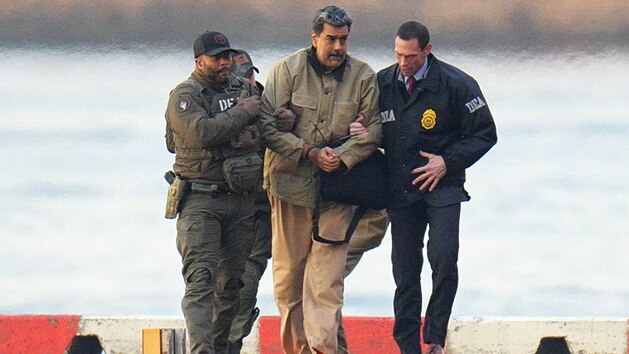

'How are we gonna get through this?' Americans face tough decisions as diesel and gas prices rise

Gas prices are displayed at a gas station on Sept. 15, 2026, in Chicago, Illinois. Gas prices across the United States continue to rise as the war with Iran has disrupted the global flow of crude oil. (Scott Olson/Getty Images)

(NEW YORK) -- As diesel and gas prices soar in the United States amid the war with Iran, Americans across the country are making tough decisions as they continue to cope with the heavy strain of inflation.

“You have to manage your bills. You have to manage the food you bring in. You have to manage how you pay your bills … everything has to be budgeted,” said Betsy Rosado, a 47-year-old mother who lives with her husband and five of their children in Spring Hill, Florida.

Rosado said her business degree has helped her manage household finances. But for others, the budgeting agony “could bring somebody to the point of depression, and it could bring somebody to a mental collapse, especially when they have kids.”

Rosado said her toddler, who has significant developmental and respiratory issues, requires treatments multiple times a week. She has had to cut back on therapy sessions because of rising gas prices.

“We had to switch to, unfortunately, virtual therapies. And with my daughter with disabilities, we are stopping occupational therapies,” she said.

As of Wednesday, the average price for a gallon of regular gasoline was $4.36, according to GasBuddy, up $1.42 since the U.S. war with Iran began on Feb. 28.

“The first thing that crosses your mind is, what is it going to be tomorrow? How are we gonna get through this, and then it's the point of, do I need to move out of this state?” Rosado said. “You feel stuck … the system is not – it's not made for us to succeed.”

Meanwhile, the cost of diesel has hit a record high at $6.30 a gallon, according to GasBuddy.

Patrick De Haan, head of petroleum analysis at GasBuddy, told ABC News on Wednesday that “a lot of states are seeing pretty monumental jumps” in both gas and diesel prices and “there's really no signs of when this might start to slow down.”

“Until something happens to deescalate these geopolitical tensions, prices will keep going higher,” he added.

Truck drivers, who are feeling the financial strain at the pump, and farmers, who rely on diesel to power up agricultural machinery, told ABC News that the rise in diesel costs has put a strain on their businesses and their livelihoods.

Lewie Pugh, who has driven over 2 million miles for the past 25 years, is also the executive vice president of the Owner Operator Independent Drivers Association (OOIDA), which represents nearly 150,000 small business truckers.

Pugh told ABC News that every $1 increase in diesel prices costs truckers approximately $400 more per tank. Some weeks have cost an extra $800 to fill up, he added.

“Trucking has a very slim profit margin already. There's just not a lot of profit in trucking. I've always said it was a penny saved business, not a penny made business,” Pugh said. “So when you're already constrained and something like this happens to this magnitude, you just can't absorb it as a motor carrier. They just can't. There's no way – they'll be out of business tomorrow.”

Pugh said the higher prices truckers are paying are being passed down to the companies whose products are being shipped, causing the prices of everything from food to clothes to go up for Americans.

“This has huge rippling effects in the supply chain and in the economy because trucking and truckers haul so much stuff,” he said.

For John Bartman, a fifth-generation farmer on his family’s centuries-old farm in Marengo, Illinois, told ABC News that the rising costs of diesel has vastly impacted his agricultural production.

“People are just very frustrated right now,” Bartman said.

Bartman, who grows soybeans, said Illinois is the No. 1 soybean producer in the nation, but skyrocketing prices in diesel and fertilizer have hindered his ability to grow the major crop.

“The price of diesel today is over $6 a gallon, and we use 300 gallons of diesel a day. So now we're talking $1,800 a day,” she said.

Additionally, he said that the cost of fertilizer was over $120 an acre this year.

“It just keeps on increasing all the time,” he said.

Bartman lamented the economic conditions and expressed concern about how this will impact the next generation of farmers.

“There's some people that think things are going to get better, but I've seen too many good young farmers who had a full-time job besides farming, who've just decided I can't do this anymore,” Bartman said. “We're losing that next generation that's coming into the business. So that is very destructive and very sad.”

ABC News' Sabina Ghebremedhin contributed to this report.

Copyright © 2026, ABC Audio. All rights reserved.


Charlie Kirk's family signals intent to sue, alleging 'stunning failures' led to on-campus assassination

A memorial for political activist Charlie Kirk stands on the grounds of Utah Valley University on Sept. 13, 2025, in Orem, Utah. (Chet Strange/Getty Images)

(NEW YORK) -- The family of Charlie Kirk alleges in a newly obtained notice of claim that a "series of stunning failures and reckless decisions" by Utah Valley University led to the conservative activist's on-campus assassination last year.

Kirk, the co-founder of the conservative student organization Turning Point USA, was fatally shot while speaking at an outdoor event at Utah Valley University in Orem, Utah, on Sept. 10, 2025. The gunman fired from the rooftop of a campus building as Kirk was speaking before a crowd of approximately 3,000 people, authorities said.

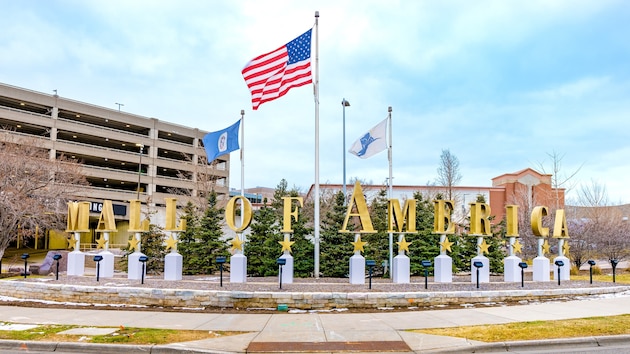
Utah Valley University was the first stop on Turning Point USA's nationwide tour of college campuses, dubbed The American Comeback Tour. The event "came against a well-known backdrop of risk," stated an emailed notice of wrongful death and survivor claims from the Kirk family's counsel dated Sept. 9 and addressed to the Utah Office of the Attorney General.

The notice, which preserves the family's statute of limitations so that they can bring a lawsuit over Kirk's death, cited high-profile incidents as recent examples of political violence -- including the attempted assassination of President Donald Trump by a rooftop sniper at a 2024 campaign rally, the 2025 murder of a Minnesota state legislator and her husband at their home and the 2022 hammer attack against Rep. Nancy Pelosi's husband.

"Through a series of stunning failures and reckless decisions, the UVU Parties created a foreseeable danger to Charlie," the notice, which ABC News obtained through the Kirk family's counsel, alleged. "Those decisions ultimately rendered Mr. Kirk helpless to the rooftop shooter in an assassination that could have been avoided had the UVU Parties only taken reasonable steps to plan and oversee a safe event, steps outlined below that have been standard practice for other universities hosting controversial speakers."

The notice alleges that the university failed to conduct a "meaningful risk assessment" before approving the outdoor location and did not dedicate enough security resources. Six campus police officers were assigned to the event, university police have said.

The notice further alleges that the university did not take steps that could have prevented Kirk's death, such as monitoring the event in real time. The notice cited surveillance footage shown during a preliminary hearing in the criminal prosecution of the alleged shooter, Tyler Robinson, that showed an individual running across the roof of the Losee Center for Student Success to what one police officer called a "sniper's pad."

"If such footage had been monitored in real-time, Kirk's tragic death could have been avoided," the notice alleged.

The notice alleged that the university ignored a tip it said Turning Point USA passed along regarding the risk of rooftop access on the campus ahead of the event. The student group allegedly texted the Utah Valley University campus police department chief, Jeffrey Long, that "there is student roof access pretty close to where [Charlie Kirk] will be set up at Utah Valley," according to the notice, which cited the campus' Sorensen Student Center.

"When a TPUSA official informed Chief Long of the concern and asked 'if this is true, it would be nice to either have it controlled access or allow one of my guys to be there as well. If Possible.' Chief Long responded by saying, 'I got you covered,'" the notice alleged. "This led TPUSA to reasonably conclude that UVU had a plan to address the identified risk and other similar risks (most obviously the risk from other rooftops) without TPUSA involvement."

The shooter fired from the roof of the Losee Center, approximately 415 feet from where Kirk was speaking, according to prosecutors in the criminal case.

"The risk of a rooftop shooter should have been especially top-of-mind given the attempted assassination of President Trump, Charlie Kirk's close friend and political ally, by a rooftop shooter the previous year," the notice stated.

The notice stated that the prospective defendants in the claim are expected to be the Utah Valley University; the State of Utah; the Utah Valley University Police Department; Chief Long; Astrid Tuminez, who was UVU's president at the time of the assassination; and possibly others.

ABC News will be reaching out to the parties for comment.

The prospective plaintiffs in the claims include the Kirk estate, his wife, Erika Kirk, and their two young children, according to the notice.

"Charlie Kirk was violently and publicly assassinated while speaking at an event at Utah Valley University (UVU). His murder was entirely preventable and, in fact, would not have happened had the State of Utah and UVU followed through on their stated security promises, which included protecting the rooftops surrounding the quad where Charlie was speaking," Brett Parkinson, counsel for the Kirk family, said in a statement to ABC News. "Those failures not only robbed Charlie Kirk of his life, but also robbed his family of their husband, father, son, and brother, with impacts that will compound for the rest of their lives. Justice and accountability under the law are key tenets of the American judicial system. This claim preserves the right of Charlie Kirk's family to pursue accountability for Charlie's death."

In the wake of the shooting, Chief Long said he worked with Kirk's private security team to establish security protocols for the event.

"We worked together. He has his team and they do this all over the country. We all know that. It's not uncommon for them. They're very comfortable on campuses. And I was coordinating with his lead security guy," Long said during a press briefing on Sept. 10, 2025.

Long said six campus police officers were working the event, including some in plainclothes who were monitoring the crowd.

"We train for these things, and you think you have things covered, and these things, unfortunately, they happen," Long said. "You try to get your bases covered and, unfortunately, today we didn't. Because of that, we have this tragic incident."

At the time, a university spokesperson told ABC News that they were unable to answer specific questions about the security plan for the event.

The university spokesperson directed ABC News to a page on the school's website answering some frequently asked questions about the Charlie Kirk event. Under the question "What security measures were taken?" the website stated, "Kirk's lead security staff coordinated with UVU Police Chief Jeff Long regarding the security measures."

The website page also said that Kirk had previously visited the school with Turning Point USA in 2019.

Following the assassination, UVU announced it would initiate a comprehensive independent review of the shooting.

"We believe the findings of the comprehensive, third-party independent review of this targeted act of violence will offer valuable insights on how college campuses improve response and preparedness moving forward," Tuminez said in a statement on Sept. 22, 2025. "We will integrate the findings into our efforts to strengthen and improve safety practices for UVU and all of Utah higher education."

Copyright © 2026, ABC Audio. All rights reserved.
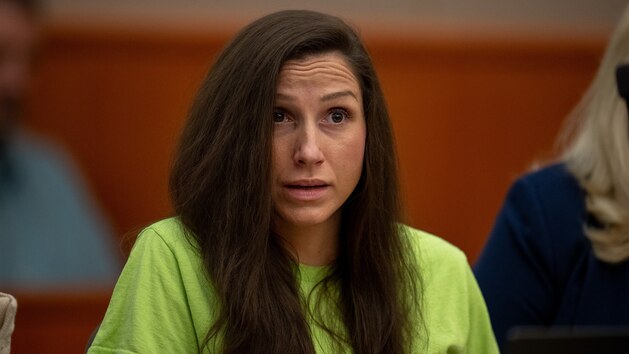

Former FEMA administrator speaks out about Kristi Noem's downfall, deadly Texas flooding

David Richardson attends the initial meeting of the Federal Emergency Management Agency Review Council at the Eisenhower Executive Office Building in Washington, May 20, 2025. (Tia Dufour/DHS)

(WASHINGTON) -- The former acting Federal Emergency Management Agency (FEMA) administrator said that Texas got the help it needed during the historic and deadly flooding over July Fourth weekend last year, despite criticism heaped on the agency's response, according to a new book set for release on Tuesday.

In the book, titled "Texas Flood: Power, Money, Politics, History, Bureaucracy and Tragedy," David Richardson also outlined what he believed to be the source of former Secretary of Homeland Security Kristi Noem's downfall as well as discussing the Trump administration's plans to restructure the agency.

"I prepared for the worst from the minute I got to FEMA, and a worst-case scenario did happen and we were able to effectively maneuver around obstacles to make sure that the people of Texas got what they needed in their time of need," Richardson told ABC News in an interview. He said the agency prepared for worst-case scenarios "though a series of planning efforts and exercises."

Democrats accused DHS of being slow on the response efforts in Texas. DHS did not immediately respond to a request for comment.

Richardson resigned from FEMA abruptly in December 2025.

At the center of that decision was a memo put by Noem requiring that every contract above $100,000 must be personally signed off by her.

"I eventually had to make a decision where I overrode DHS headquarters and sent the support anyhow," Richardson said, referring to Texas. "I knew the magnitude of the problem when I started looking at the low end of $500 million a day we're going to have to write contracts for. If I'm going to have to have everyone over $100,000 approved by headquarters, that's just another layer of bureaucracy."

In the book, Richardson paints the picture of Department of Homeland Security putting put "spies" at FEMA headquarters, to see what he was doing, and a secretary concerned with her appearance more than actually getting work done. 

Richardson recounts in the book one of his employees saying the memo would "kill" them during a disaster. A former Marine, Richardson said he viewed getting lifesaving support to Texas as essential, regardless of the cost.

"When a Marine or an Army ranger calls for support, they get what they need, regardless of the cost," he said.  "That's how I viewed getting support during hurricanes or as it came to be during the flash flood in Texas."

In practice, the cost saving measures were well intentioned, he said, but "he downstream effects of that memo...were never really considered." 

"I firmly believe that the 100K memo and the ramifications that it had was the beginning of the end for Secretary Noem," he said.

Typically, FEMA administrators are on the ground immediately after a natural disaster strikes, but Richardson didn't go to Texas immediately because he believed the "greatest point of friction" was in DC. 

"I was going to go to Texas once the check was cashed," he said. "I wasn't going to Texas and tell them the check is in the mail. I made sure it was cashed before I went there to see the people of Texas."

Richardson also detailed in the book how he spent one night in Gettysburg, Pa. when the floods hit over July Fourth weekend, and raced back to D.C. the morning after. He took criticism during his testimony by House Democrats, but outlined in his book that he worked throughout the trip. 

In the book, he detailed the exercises FEMA ran to prepare for a disaster, including modeling what would happening during a Category 3 hurricane - which would cost hundreds of millions of dollars to respond to. 

Richardson told ABC News it was "not true" that FEMA withheld essential support from Texas, and that there were already FEMA teams on the ground to respond to the floods, including a FEMA team in Denton and utilizing the Coast Guard for search and rescue.

"The tragedy was, so many people died and the search and rescue teams had to get to Texas so they could recover the bodies," he told ABC News.

Richardson said he realized that once his plan to reshape the agency wasn't going to be considered and instead had to be worked through the FEMA review council, set up to recommend the future of the agency, he decided to resign. 

The FEMA Review Council's recommendations, the body which advised the DHS of reducing the size of the agency in DC don't go far enough he says, and in the book he argues FEMA should not be under DHS, but report directly to the president. 

"I realized OK, I'm just here for hurricane season," he said. "And once hurricane season is over, I'm done because I don't want to be in charge of a bloated Inefficient agency like FEMA that I can't put on a diet."

He called the agency "bloated, overweight and unhealthy," and wanted to put FEMA "on a diet," by reducing the number of employees at FEMA headquarters. 

Michael Coen, the former FEMA chief of staff in the Biden and Obama administrations told ABC News that FEMA is a critical organization that supports people on their worst days.

“FEMA’s structure has been built to align the necessary resources and staff to address the risks the nation may face,” he said in response to Richardson’s critiques of FEMA being a bloated agency. “The Agency is continuously improving and learning to meet the mission.”

Copyright © 2026, ABC Audio. All rights reserved.
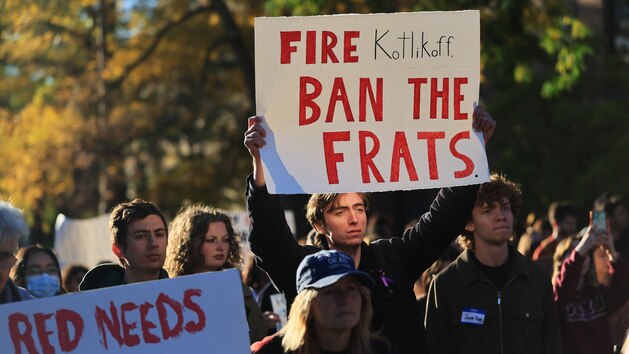

Mayors and states sue Trump over new green card restrictions

Zohran Mamdani announces at a news conference that he is suing President Donald Trump's administration over its policies that he says will drive immigrants and mixed-status families away from public benefits they can legally receive on Sept. 14, 2026, in New York City. The announcement at City Hall included local politicians and immigrant advocates. (Spencer Platt/Getty Images)

(NEW YORK) -- New York City Mayor Zohran Mamdani and a coalition of Democratic-led cities and states across the country have filed a lawsuit challenging a new rule issued by the Trump administration that's set to go into effect on Friday. The rule would give immigration officers wider discretion to deny green cards to some applicants.

Immigration officers would be able to deny green cards to people who are "likely at any time to become a public charge," according to a policy notice published on the US. Citizenship and Immigration Services (USCIS) website.

The Trump administration announced the new rule in July.

Under current law, the government can deny a green card to those who become primarily dependent on government cash assistance or long-term medical care paid for by federal agencies. The Trump administration expanded the list to include non-cash, temporary programs like SNAP and WIC.

The government could now prevent someone from gaining permanent legal status if officials believe they’re likely at any point to require such programs.

Opponents say it could prevent U.S. citizens and their family members from obtaining certain benefits. For instance, federal officers could count a child's participation in a school's free lunch program against their parent’s application for citizenship.

"This is an undisguised effort to strip New Yorkers of the services they rely on," Mamdani told reporters. "People could die."

New York Attorney General Letitia James and 21 other states announced a separate lawsuit challenging the public charge rule.

In a complaint filed in the U.S. District Court for the Southern District of New York, the cities and states argued the new rule will lead to an increase of homelessness, untreated illnesses, lack of access to education and food insecurity.

USCIS said certain groups would not be affected, such as asylum seekers, refugees, human trafficking victims and others.

At the press conference, James said she and others were filing the lawsuit because "New Yorkers should not have to choose between putting food on the table, getting the health care they need, and pursuing a future in this country."

A Department of Homeland Security spokesperson told ABC News, "Let’s get this straight, sanctuary states are terrified they will lose federal funds because hundreds of thousands of illegals and noncitizens might remove themselves from American welfare programs. We’re shaking in our boots over this supposedly terrible outcome."

Copyright © 2026, ABC Audio. All rights reserved.


Another measles-related death reported in Pennsylvania as outbreak grows

Illustration of measles virus particle. (Getty Images/Kateryna Kon/Science Photo Library)

(NEW YORK) -- A coroner's office in Pennsylvania reported a measles-related death of a 40-year-old unvaccinated woman on Sunday, which comes amid a growing outbreak in the state.

"A 40-year-old female resident of Jefferson County died on Saturday, September 12, 2026, from complications associated with measles. Out of respect for the privacy of the deceased and her family, no additional identifying information will be released,” the Jefferson County Coroner's Office said in a post on Facebook.

"This is a heartbreaking loss for the family and an unfortunate reminder that measles can be a serious and potentially life-threatening disease,” Coroner Greg Furlong said.

The person was unvaccinated against measles, Furlong confirmed to ABC News. 

The Pennsylvania Department of Health said they are investigating this death reported by the Jefferson County coroner in a statement provided to ABC News. 

As of Friday, the Pennsylvania Department of Health has reported 676 measles cases in the state, with over 100 new cases reported over the last week. Of the cases, 124 have been hospitalized, and nearly all cases are among those unvaccinated against the virus, according to data from the health department. 

The number of measles-associated deaths reported by Pennsylvania officials has been disputed by Secretary of Health and Human Services Robert F. Kennedy Jr. in recent weeks. 

The Centers for Disease Control and Prevention has not reported any measles deaths in 2026 on its website, last updated on Friday, while the PA Department of Health has previously reported two measles-associated deaths linked to this outbreak.

CDC Director Dr. Erica Schwartz said in a statement that the agency has not yet been notified of this most recent death reported in Jefferson County. 

"CDC was not notified by Pennsylvania officials of this death,” Schwartz said. "Despite repeated offers of assistance, Pennsylvania has not requested a CDC Epi-Aid, which would deploy epidemiologists and provide on-the-ground measles outbreak support.”

In late August, Pennsylvania’s top health official, Dr Debra Bogen, had said her staff was having “regular meetings with professional staff at the CDC” in a post on X responding to health secretary Robert F. Kennedy Jr. saying her department had “refused to share information” with the CDC after the first two measles-associated deaths in the state were announced.

Copyright © 2026, ABC Audio. All rights reserved.

Millions dropped from SNAP food assistance as funding faces September uncertainty

 A sign indicates the store accepts SNAP benefits on April 21, 2026, in Miami, Florida. (Joe Raedle/Getty Images)

(WASHINGTON) -- Supplemental Nutrition Assistance Program (SNAP) funding could face a major shake-up at the end of September unless Congress passes a resolution to delay major changes included in H.R. 1, commonly known as the GOP's One Big Beautiful Bill.

Starting Oct. 1, states will have to pick up 75% of the administrative costs of running the program, with the funding burden of providing benefits to participants set to shift from the federal to state level over the next few years.

State and national food assistance groups are calling on Congress to pass a resolution delaying the implementation of this cost shift, to give states more time to prepare for the bigger bill.

The federal food assistance program faced a funding lapse last fall, and experts are now warning of an uncertain future.

Nationwide, roughly 5 million Americans have lost access to SNAP since the Republican-backed budget bill became law, including more than 1.5 million children, according to the Center on Budget and Policy Priorities.

Much of the decline can be attributed to changes in work requirements and administrative hurdles in applying, coupled with a major cost shift that states will have to bear if they want SNAP to remain fully funded, Dottie Rosenbaum, director of federal SNAP policy at the CBPP, told ABC News.

Under the law, the upper age limit for able-bodied adults without dependents who must meet work requirements was raised from 54 to 64.

Additionally, exemptions were changed for parents and other family members responsible for a dependent, lowering the qualifying age from 18 to 14.

"The declines we're seeing in SNAP participation so far are far deeper and far faster than the Congressional Budget Office predicted at the time the law was enacted, and it's especially alarming that more than one and a half million children have been cut," Rosenbaum said.

"We're hearing increasing reports ... of people struggling to put food on the table, of people facing untenable choices between, you know, paying their rent and buying groceries and other essentials, putting gas in their cars," Rosenbaum added.

The White House did not respond to a request for comment on the impact of the new work requirements. The administration has publicly supported the idea in the past.

"The American dream is not being on [a] food stamp program. ... The American dream is not being on all these programs. That should be a hand up, not a handout," Agriculture Secretary Brooke Rollins said in an interview on Fox Business in January.

Alongside the new work requirements, the budget outlined a major shift in costs from the federal government to the states.

Beyond each state's responsibility to pay 75% of SNAP's administrative costs starting in October, states are set to pay a percentage of the benefit costs tied to its error rate in the coming years.

The error rate measures underpayments and overpayments, resulting in mandatory additional payments ranging from 5% to 15% for most states.

Impacts already seen

In Arizona, the state "took immediate action on error reduction efforts after H.R. 1 became law," the Arizona Dept. of Economic Security said. This included expanding documentation requirements, establishing a preauthorization review process and continuous income monitoring. More than 400,000 SNAP recipients lost access to the program thereafter, according to the CBPP.

"Which meant that the number of people visiting food banks increased by about the same amount," Terri Shoemaker, executive vice president of the Arizona Food Bank Network, said, crediting the state's changes in SNAP for the substantial drop in participation.

"We know that [the Arizona Department of Economic Security] is trying to get its arms around accuracy and reporting, but at the same time, we also know that there are people who were impacted by those changes who shouldn't have been," Shoemaker said.

When the changes began in Arizona, Shoemaker said, communities rallied to donate food to people who had lost access to SNAP. Still, she added, the response is not sustainable.

"For every one meal that Arizona food banks provide for families, SNAP usually provides about five," Shoemaker said. "Nationally, that statistic is more like one [meal from food banks] for every nine [meals from SNAP]. But if you think about that and food banks trying to fill that gap, it's just a scale and scope that is so vast that food banks are going to have a hard time keeping up."

In neighboring New Mexico, the impact can also be seen.

"Find out where your food bank distributes food and check out the length of a line," said Jill Dixon, the executive director of the Food Depot -- a collection of food banks covering northern New Mexico. "We have one in front of our building on the first and third Thursday of every month. That line usually extends over a mile and a half by the time it opens at 7 a.m."

The Food Depot distributed more than 8 million meals across much of New Mexico in 2025.

"These are people. They're not lines. It's not boxes of food. It's not anonymous. It's deeply personal, and it's right at the center of our community," Dixon said.

"We're going to see some hard times ahead," she added. "Long term, we really have a reckoning of how we're going to go about making sure that people are fed in a moment when it is incredibly hard to make ends meet."

Predominantly Republican states hit

In predominantly Republican states, the impact is similar. Louisiana has seen the second largest per-capita decline, with 21% of the state's SNAP recipients no longer having access to SNAP according to the CBPP.

Food Bank of North Central Arkansas CEO Jeff Quick said his state is facing a burden too large to bear without major changes. "We will never be able to food bank our way out of food insecurity," Quick said.

"At best, I think we may be unprepared or unable to cover the cost to continue SNAP in Arkansas, and again, if that worst-case scenario were to happen, it could have an estimated $1.2 billion negative economic impact on our state," he added.

Quick also said work requirements have hit harder in Arkansas, adding that a worker earning the state's $11-an-hour minimum wage may still be ineligible for SNAP benefits.

"We don't want to see anyone go hungry, and regardless of who you are or how you vote or how you legislate, we're all on the same path," Quick said. "We got to put great minds together around common causes to find solutions to hunger."

The White House did not comment on whether the administration supports delaying the cost shift.

What's next?

Food bank organizations at the state and national levels are asking Congress to pass a resolution delaying the cost shift and allowing states more time to lower their error rates before taking on the additional costs.

"States need more time," Rosenbaum said. "They need more time to work to lower their error rate and improve their payment accuracy in a way that doesn't limit access to benefits."

Senate Agriculture Committee Chairman John Boozman released a version of the farm bill that would delay the cost shift of SNAP, though it has not advanced through the opposite chamber.

Lawmakers return to Washington from August recess on Sept. 14.

Copyright © 2026, ABC Audio. All rights reserved.

Teen rescued from atop overturned boat in deadly capsize off Alaska coast

A 15-year-old boy is rescued from a capsized boat off Alaska, Sept. 7, 2026. (Carlos Escartin)

(NEW YORK) -- A 15-year-old boy survived atop a fishing vessel after it capsized in frigid waters off the coast of Alaska, while his two crew members died, according to the U.S. Coast Guard.

The Coast Guard pilot who spotted the lone survivor sitting atop the overturned boat in the Bering Sea called the rescue an "emotional roller coaster" in an interview with ABC News on Thursday.

"We are beyond excited and beyond grateful that we found him, and at the same time, we are overwhelmingly remorseful that we didn't find the other two in time," Lt. Cmdr. Jonathon Resch told ABC News correspondent Trevor Ault.

The 18-foot fishing vessel had departed Savoonga on St. Lawrence Island on Friday and was due back early Sunday, according to the Coast Guard. It was reported overdue Sunday night, prompting the search and rescue effort.

Due to weather conditions, the Coast Guard HC-130 Hercules aircrew wasn't able to begin the search until Monday, according to the Coast Guard.

Resch spotted the teen sitting on top of the skiff Monday morning approximately 4 miles from St. Lawrence Island, calling it "nothing short of miraculous."

"People don't survive those scenarios," he said. "People don't flip boats and survive nights. They don't do it in warm water, let alone in water that's, you know, 40 degrees."

The Coast Guard coordinated the rescue with a nearby good Samaritan vessel, Northwest Explorer.

The aircrew dropped flares and life rafts in the water to increase the visibility of the teen's overturned boat while waiting for the Northwest Explorer to arrive, Resch said.

"That's another miracle in itself," Resch said of the boat rescue.

Video of the rescue showed the teen kneeling on the overturned skiff as he's reeled in with a heaving line and then brought aboard the Northwest Explorer fishing vessel.

The 15-year-old survivor had symptoms of hypothermia, the Coast Guard said. The two deceased boaters were recovered from the water and transported along with the survivor to Nome.

The Coast Guard has not released the names of the deceased boaters or the survivor.

"Our hearts go out to the families, friends, and communities affected by the tragic loss of these two mariners," Rear Adm. Bob Little, the commander of the Arctic District, said in a statement. "We are grateful for the incredible efforts of the motor vessel Northwest Explorer, Federal, State, Village first responders and mission partners who assisted in the effort that resulted in a life saved."

Copyright © 2026, ABC Audio. All rights reserved.


Clancy holdout juror mimicked strangling during deliberations, juror claims

Nick Dargie, 25, a juror in the Lindsay Clancy trial, speaks with ABC News' Aaron Katersky on Sept. 9, 2026. (ABC News)

(NEW YORK) -- A juror in the trial of Lindsay Clancy is sharing new details about what he said happened inside the jury room that led to a mistrial in the case of the Massachusetts woman facing first-degree murder charges for the 2023 deaths of her three young children.

Nick Dargie, one of the three men on the 12-person jury, told ABC News' Aaron Katersky that the lone holdout juror who prevented a unanimous verdict did not show any evidence explaining his vote.

"There was several times I would ask him to show us evidence or, you know, describe a witness testimony that helped to prove what he was saying, and ... he couldn't," Dargie, 25, said in an interview that aired Thursday on "Good Morning America."

Jury deliberations eventually yielded an 11-1 split in favor of not guilty by reason of insanity, but the final juror would not change his position favoring conviction, despite expressing reasonable doubt, according to Dargie and three other jurors who also spoke out publicly.

"There wasn't a single piece of evidence or witness testimony that he used to prove why he was thinking the way he was, which is why we ultimately sent in that note," Dargie said, referring to a note the jury foreperson gave to Judge William Sullivan, leading him to declare a mistrial. "Otherwise, like there's nothing wrong with somebody having a completely opposite opinion ... that would be a hung jury. That is our justice system."

Clancy pleaded not guilty to three murder charges for the deaths of her 5-year-old daughter Cora, 3-year-old son Dawson and infant son Callan at the family's home in Duxbury, a Boston suburb, on Jan. 24, 2023.

The former nurse attempted suicide on the night of her children's deaths, leaving her paralyzed and in a wheelchair, according to state prosecutors.

Her five-week trial ended in a mistrial on Sept. 4, after a week of deliberations.

Throughout Clancy's trial, much of the testimony centered on whether or not she was suffering from postpartum psychosis -- considered a psychiatric emergency, according to the American College of Obstetricians and Gynecologists -- when she strangled her children and attempted to take her own life, and whether she should be held criminally liable for the killings.

Jurors in Massachusetts are instructed that in order to prove a defendant is criminally responsible for their conduct, prosecutors must "prove beyond a reasonable doubt that the defendant did not suffer from a mental disease or defect at the time of the alleged offense," according to the Massachusetts Court System.

Dargie said the holdout juror, who has not been publicly identified, often "wouldn't engage" with fellow jurors, and would spend time "scrolling on his phone" during deliberations.

Dargie said at one point he confronted the juror during deliberations when he claims the man picked up the exercise band Clancy used to strangle her children. The band was presented as an exhibit during the trial.

"He took the exercise band out of the bag, grabbed an empty water bottle, and tied the band around the water bottle and pulled it," Dargie said, adding that he asked the juror, "Why are you doing that?"

"I was shocked. It didn't make any sense to me," Dargie said. "We're not in here to play detective or it's not a game of 'Clue.' This is serious."

Dargie -- a military veteran who was deployed internationally at the time Clancy was charged with the deaths of her children -- said he was dismayed to learn after the trial about online conspiracies falsely accusing Clancy's ex-husband, Patrick Clancy, of murdering their children.

Patrick Clancy's attorney issued a statement on Tuesday calling for an end to the conspiracy theories, saying, "Enough is enough."

"This spread of blatant and baseless falsehoods must stop," Howard Cooper, Patrick Clancy's attorney, said in a statement. "Those responsible should understand that there will be consequences, and every appropriate measure will be pursued to hold them accountable, including legally. Law enforcement has been notified."

Lindsay Clancy's attorney Kevin Reddington has also defended Patrick Clancy, calling the false conspiracy theories about him "reprehensible."

"He was by her side. He talked to these doctors. He told one of them that you're turning her into a zombie, and he was with her literally days after and forgave her," Reddington told Katersky in an interview earlier this week. "I think what's happened to that man is reprehensible."

Dargie said the trial haunts him still, particularly the 911 call that Patrick Clancy made after finding his children. The 911 call was played in the courtroom but was not broadcast publicly under order of the judge.

"I've never heard something like that, like a scream like that come out of someone's mouth. It's horrifying," Dargie said of the 911 call, adding of the conspiracies surrounding Patrick Clancy, "I think if everyone heard that 911 call, they would change their mind."

Plymouth County District Attorney Timothy Cruz has not yet announced a decision on whether to retry Lindsay Clancy.

"I appreciate the fact that there are strong feelings and opinions tied to this case," Cruz said outside the courthouse on Sept. 4, when the mistrial was declared. "However, our job is to set aside our feelings and focus solely on the facts. The facts are Lindsay Clancy killed her three children and the evidence suggested to us that she was in control of her actions when she committed those homicides."

The two sides are scheduled to be in court on Sept. 29 to determine next steps following the mistrial.

Dargie said he believes if Lindsay Clancy is tried again, she would not be found criminally responsible.

"I think if they tried the trial again the way they did, I think nine times out of 10, I think a jury would come back with not guilty by reason of insanity," he said. "No doubt in my mind."

If you or someone you know is struggling with thoughts of suicide, call or text 988 or chat 988lifeline.org. Free, confidential help is available 24 hours a day, 7 days a week. You are not on your own.

Copyright © 2026, ABC Audio. All rights reserved.

Steve Witkoff earned nearly $107M from Trump-affiliated crypto venture, disclosures show

Special Envoy to the Middle East Steve Witkoff attends a Cabinet Meeting at Camp David on July 31, 2026 in Camp David, Maryland. (Anna Moneymaker/Getty Images)

(WASHINGTON) -- U.S. special envoy Steve Witkoff made nearly $107 million last year from a holding company affiliated with World Liberty Financial, the cryptocurrency firm he cofounded with President Donald Trump and members of their respective families, according to financial disclosures obtained by a government watchdog. 

Witkoff, one of President Trump's top negotiators working to broker peace deals in the Middle East and Ukraine, was at one point listed as a "co-founder emeritus" on World Liberty's website, a title he shared with President Trump.

The firm is operated by Witkoff's son, Zach Witkoff, and Trump's three sons. 

Trump and Witkoff have both attracted scrutiny for their involvement in World Liberty Financial, which recently secured preliminary approval from the Trump administration to operate as a bank. Critics say their private enterprise presents the appearance of a conflict of interest. 

World Liberty has repeatedly brushed aside conflict-of-interest concerns. In May 2025, World Liberty wrote on X that Witkoff was in the process of divesting himself from the firm and "has no operational role, no financial interest in WLFI deals, and no influence on day-to-day decisions." 

Trump himself has reported earning $526 million from the sale of cryptocurrency tokens through World Liberty Financial, according to financial disclosures filed over the summer. He earned another $65 million from sales of equity in WLF's holding company.

Anna Kelly, a White House spokesperson, told ABC News on Wednesday that Witkoff has now "fully divested from World Liberty Financial, and his prior commercial activities are completely unrelated to his efforts to end global conflicts on the President's behalf." 

Copyright © 2026, ABC Audio. All rights reserved.

'We won’t be erased': Academics defend Black studies amid program cuts

Aidan Keys is a fourth-year PhD student studying African and African Diaspora Studies at the University of Texas at Austin. (Courtesy Aidan Keys)

(NEW YORK) -- At a time when Diversity, Equity and Inclusion (DEI) efforts face local and federal backlash, some academics say that Black studies programs -- several of which have been scaled back at colleges and universities across the nation -- are more crucial than ever.

"The Trump administration has made clear to colleges and universities that they don't want them doing anything that is race conscious. So, institutions are very cowardly defunding and eliminating these academic programs and departments that have enriched the campus for decades," Dr. Shaun Harper, a professor at University of Southern California that specializes in racial equity, told ABC News.

According to Harper, President Donald Trump's executive order in January 2025 targeting DEI initiatives in the private sector has fueled nationwide anti-DEI sentiment.

The executive order instructed the Departments of Justice and Education to investigate DEI programs at institutions of higher education.

Trump's order doesn't explicitly mention Black studies programs at colleges and universities, but it criticizes institutions of higher education that use "dangerous, demeaning, and immoral race- and sex-based preferences."

Following his order, the Department of Education sent a letter to colleges and universities, notifying them that they will investigate and sever federal funding if they maintain DEI programs that the administration considers illegal.

"Many institutions haphazardly scrubbed their websites of everything related to race," Harper said.

The politicization of DEI at the federal level has created a "trickle-down effect" at institutions where Black history and experiences have been undervalued, according to Harper.

'We're not going anywhere. We won't be erased'

The University of Texas at Austin is one of the institutions that has consolidated their department this year.

Dr. Danielle Clealand, an associate professor at UT Austin that researches Black politics, told ABC News that there was "shock" among faculty and students when they were notified about the consolidation.

"We were the largest Black Studies department in the nation, so it was devastating," she said.

"It hurts really bad. I really don't like that I don't have a department anymore," Aidan Keys, a fourth-year Ph.D. student in African and African Diaspora Studies at UT Austin, told ABC News.

In a letter to the campus community obtained by ABC News, UT Austin President Jim Davis announced that the Department of African and African Diaspora Studies would merge into the Department of Social and Cultural Analysis.

Other departments, such as Mexican American & Latina/o Studies and Women's, Gender, and Sexuality Studies, were also brought under the single academic unit.

The university said it examined several factors to determine which programs should be merged like their size, student-to-faculty ratio and resource allocation.

"The University of Texas at Austin is committed to providing all of our students access to a world-class education," Davis stated. "How we choose to organize ourselves and allocate the resources we steward impacts this important commitment."

The announcement came after Texas Gov. Greg Abbott's 2023 passage of SB 17, banning public colleges and universities from having DEI offices and offering training or hiring policies based on race, gender and sexual orientation.

A UT Austin spokesperson told ABC News that the bill didn't apply to their curricula changes.

But Keys said that the university's decision to merge Black Studies is still politically motivated.

"I think that the [Abbott] administration is trying their hardest to silence us and erase more leftist ideas from the campus," she said.

According to Harper -- the University of Southern California professor -- recent cuts to Black studies programs appear to be more prevalent in institutions located in the U.S. Midwest and the South, based on his analysis.

"With the exception of historically Black colleges and universities, and perhaps a handful of other higher education institutions across the country, most predominantly white institutions have chronically failed to demonstrate their care for Black people," he said.

While students at UT Austin can still major in Black studies, Indiana University Bloomington no longer offers a degree in African American and African Diaspora Studies (AAADS).

Instead, undergraduate and graduate students earn a degree in Interdisciplinary Studies with a subfield in AAADS.

"We are totally against it," Professor Jakobi Williams, the chair of the AAADS department, told ABC News regarding the policy, adding that the department is advocating to reverse the degree title change.

"We're not going anywhere. We won't be erased," he added.

The university's decision to discontinue the AAADS major followed an Indiana state budget mandate -- introduced by the Republican majority -- requiring public institutions to graduate 15 students in a bachelor's degree program, seven students in a master's program and three students in a doctorate program over a three-year period to retain the degree.

Indiana University didn’t respond to ABC News’ request for comment on criticisms regarding the degree title change.

Williams explained that the AAADS department graduates about seven to 10 students annually across all degree programs.

'What we do is so important'

Proponents of Black studies argue that the discipline is valuable because it encourages students to develop cultural knowledge.

"The nature of our discipline is to speak truth to power and train students and the public at large regarding issues like discrimination and socio-economic relations, especially in the larger African diaspora," Williams said.

"Black Studies is experiencing a moment where we have to remind students why what we do is so important, not only to their academic experience but also to their training as citizens of this country," Cleadland, the associate professor at UT Austin, explained.

Harper, the USC professor, said that reductions to these programs can produce significant consequences, especially for non-Black racial groups.

"If we have millions of college-educated white Americans who go into the world not knowing anything about any other population besides white people, they are going to make lots of costly, very embarrassing mistakes," he said.

Harper also argued that Black studies and other disciplines have been challenged before, yet prevailed.

"Black Studies, Ethnic Studies, and Women's Studies are incredibly resilient fields that have encountered politicized resistance," he said. "We have seen and lived through this particular moment before, and those very important academic fields and disciplines survived."

ABC News' Deena Zaru contributed to this report.

Copyright © 2026, ABC Audio. All rights reserved.

Lindsay Clancy trial jurors speak out after mistrial

Exterior view of Plymouth Superior Court during Lindsay Clancy's murder trial on Aug. 26, 2026, in Plymouth, Massachusetts. (Mel Musto/Getty Images)

(NEW YORK) -- Jurors in the murder trial of Lindsay Clancy are speaking out after the 12-person group was unable to reach a unanimous verdict, triggering a mistrial in the high-profile case.

In an interview with NBC 10 Boston, which aired Tuesday, the jurors discussed their task of determining a verdict after a weekslong trial which centered around the events of Jan. 24, 2023, when Clancy was accused of strangling her 5-year-old daughter Cora, 3-year-old son Dawson and infant son Callan at the family's home in Duxbury, a Boston suburb.

Clancy and her attorney, Kevin Reddington, argued that she killed her three children but should not be held criminally responsible for their deaths, because she was experiencing postpartum psychosis at the time of the killings.

Prosecutors argued that Clancy was criminally responsible for the children's deaths and was capable of understanding the severity of her actions.

Throughout Clancy's trial, much of the testimony centered on whether or not Clancy was suffering from postpartum psychosis when she strangled her children and attempted to take her own life.

"We weren't trying to figure out if she murdered the children. She did," said foreperson Roni Carlson. "We're trying to figure out, 'Did she know right from wrong at that time?'"

"With everybody saying she loved her children so much, and everything proved she loved her children ... she had to have snapped," Carlson added.

Jury deliberations spanned seven days, eventually yielding an 11-1 split in favor of not guilty by reason of insanity, but the final juror would not relinquish his position in favor of conviction, according to the jurors who spoke out publicly.

"He was very arrogant, he really did not take anything that anybody said," said Paula Devlin, another juror.

The judge overseeing the trial, Judge William Sullivan, sought to emphasize to jurors during deliberations that it was their duty to determine whether prosecutors had successfully proven Clancy's guilt beyond a reasonable doubt, the standard prosecutors must surpass in order to secure a conviction in a criminal case. Sullivan repeated that instruction to the jury multiple times across the seven-day span, but it had little to no impact on the holdout juror, Carlson said.

Carlson alleges that at one point, the holdout juror admitted to having reasonable doubt about Clancy's guilt but would not change his mind.

"He admitted he had reasonable doubt," Carlson said. "I started filling out the forms, I was so excited ... and then he said, 'But I'm still not gonna say that she's not guilty by reason of insanity.'"

Jurors also opened up about the significant impact the evidence in the case had on them, specifically the gut-wrenching 911 call made by Clancy's then-husband Patrick Clancy, who found his wife after her suicide attempt and discovered his three children in the basement of the home the day of the killings.

"It's something that I will never not hear, if I think about it," juror Kellie Farina said. "It was the most horrific thing."

The jurors also touched on their feelings about each side's legal representation.

"I just found it to be harsh," Farina said of the prosecution's case.

The jurors said they found defense attorney Kevin Reddington both "entertaining" and "arrogant."

Reddington told ABC News in an interview this week that he could understand why there was so much passion around this case.

"You've got three dead children," he said. "You've got a lot of lightning rod emotion on both sides, unbelievable emotion on both sides."

Reddington ultimately said he believes Clancy should have been acquitted.

"She deserved an acquittal, not because of me, but because the evidence that was there or not there," he said.

Copyright © 2026, ABC Audio. All rights reserved.

NTSB to release readout from cockpit voice recorder following Amazon cargo plane crash that killed 5

Investigators continue work to determine what caused the crash of an Amazon cargo plane at Miami International Airport on September 07, 2026 in Miami, Florida. (Joe Raedle/Getty Images)

(NEW YORK) -- The National Transportation Safety Board expects to interview the two pilots who were in the cockpit of an Amazon Air cargo plane that overran a runway at Miami International Airport on Sunday, crashing into a van and leaving five people dead. 

At a press briefing Tuesday night, NTSB Chairwoman Jennifer Homendy said investigators have recovered the cockpit voice recorders, which she said contains two hours of good-quality audio, and the flight data recorder, which she said contains 55 hours' worth of data. 

Investigators have already combed through some of the data, which indicated that the plane was coming in for landing, but that several seconds before the recording ends, throttles increased consistent with a "go-around thrust," NTSB investigator Chihoon Shin said. A few seconds later, brakes were reapplied and continued to be applied until the end of the recording, but there was no indication that speed brakes or thrust reversers were deployed, he said. 

Homendy said the NSTB expected to release a readout of the voice recorder on Wednesday after the pilots had been interviewed. 

The cargo plane, Amazon Air Flight 7598 arriving from Puerto Rico, was carrying about 32,000 pounds of mostly contact lenses, Homendy said.

When it overran the runway, the plane hit a Ford Econoline van owned by a company that cleans aircraft, with seven people inside. 

The five people who were killed were identified by the Miami-Dade County Sheriff's Office as: Rolando Aleman Leon, 55; Yoel Rodriguez Narajo, 53; Julio C. Pineda, 75; Carlos Acosta Fajardo, 53; and Javierkys Reyes Quevedo, 47.

The aircraft's two pilots were treated and have been released from the hospital, according to the sheriff's office.

Copyright © 2026, ABC Audio. All rights reserved.

US students' reading scores take a dive, new data shows

(WASHINGTON) -- New data shows U.S. students continue to fall behind their peers in reading as the country's achievement gap widens, according to results from the latest globally recognized international exam.

The 2025 Program for International Assessment, or PISA, found that 15-year-old U.S. students' reading scores fell 14 points from the last time the test was administered, in 2022. The assessment also found that the achievement gap among U.S. readers in the 90th percentile and the 10th percentile was the largest among any other country included in the report.

The results come as reading scores among U.S. fourth and eighth grade students worsened in 2024, according to the National Assessment of Educational Progress, dubbed the nation's report card. The recent plunge has renewed the conversation around the literacy crisis gripping the nation's education system and the debate over COVID-19 school closures.

The Department of Education's National Center for Education Statistics, or NCES, which administers both tests to American students, releases the PISA results every three years.

Acting NCES Commissioner Matthew Soldner noted in a press release Tuesday that the performance gap between higher and lower end U.S. students is larger today than it was 10 years ago.

Combined with the NAEP -- the largest assessment of U.S. students' performance in public and private schools across all 50 states and the District of Columbia -- Kevin Huffman, CEO of education nonprofit Accelerate, told ABC News the PISA results are troubling.

"People should have been concerned for a while about the direction of scores for older kids in this country," Huffman said.

The international education scores confirm a "decade of stagnation and a devastating gap" for American students, according to Education Secretary Linda McMahon.

"This moment is a stress test for our nation's future," McMahon wrote in a statement. "To pass it, we must enact a hard reset that stops protecting a failed status quo and instead builds a system that empowers state leaders and embraces innovative learning options through school choice."

PISA -- which is organized by the Organization for Economic Cooperation and Development, or OECD -- is the industry standard for ranking students from different countries, according to education experts. More than 700,000 students in roughly 90 education systems worldwide, including more than 30 developed nations in the OECD, participated in 2025.

Huffman, the former Tennessee education commissioner, stressed that the gap for the highest and lowest performing students from the assessments was exacerbated by the interrupted instructional period most U.S. students experienced amid the COVID-19 pandemic. He suggested that the disturbing trend in American education will worsen without accountability at the state level.

"I do worry about the idea that if top performing kids do OK, it decreases the urgency among a group of people who otherwise might be pushing to improve educational performance for all kids," Huffman said.

Despite the sobering data, U.S. average scores in reading and science were higher than the OECD average in those subjects, according to the PISA results.

According to NCES, only Singapore and parts of China scored higher averages that were "significantly different" than the U.S. in both of those subjects.

The U.S. ranked 13th overall in reading and science but fell outside the top 25 in math (27th). There was no significant change in scores for science and math from 2022 and 2015, which is how PISA calculates short-term and long-term trends.

Copyright © 2026, ABC Audio. All rights reserved.

'Utter devastation': NTSB investigation underway after Amazon cargo plane crash leaves 5 dead, 5 injured

NTSB investigators examine the wreckage field Monday after a Boeing 767 cargo plane operating as 21 Air LLC Flight 7598 overran the end of runway 30 while landing Sunday at Miami International Airport; Sept. 7, 2026. (National Transportation Safety Board)

(WASHINGTON) -- A National Transportation Safety Board investigation is underway after an Amazon Air cargo plane overran a runway at Miami International Airport on Sunday, leaving five people dead and five injured.

Of the five people injured, three remain hospitalized, two of whom are in critical condition and one of whom is in stable condition, Rosie Cordero-Stutz, the Miami-Dade County sheriff, said in a news conference on Tuesday.

The five deceased victims were identified in the news conference as: Rolando Aleman Leon, 55; Yoel Rodriguez Narajo, 53; Julio C. Pineda, 75; Carlos Acosta Fajardo, 53; and Javierk Reyes Quevedo, 47.

The aircraft's two pilots were treated and have been released from the hospital, according to the sheriff's office.

At a news conference on Monday, NTSB Chairwoman Jennifer Homendy said the Amazon cargo plane hit a van with seven people inside and an SUV when it overran the runway. The van was inside the airport perimeter and the SUV was outside the perimeter, Homendy said.

All of the people who were killed were in the van at the time of the crash, according to the sheriff's office.

A team of 32 people is currently on site and will be documenting the scene and collecting "perishable evidence" over the week, Homendy said. She described the scene as "devastating."

"I would describe it in word one word of devastating, utter devastation," Homendy said. "I mean, you can see, on the paved surface, tire marks that [continue] through the grass. There's debris everywhere. The Econoline van is torn apart. It is, you know, certainly must have been devastating."

Homendy said the flight was arriving from Puerto Rico with two crew members onboard and that it was the third trip for the plane that day, having gone from Cincinnati to Miami to San Juan before heading back to Miami.

The accident occurred at 1:53 p.m. ET when the plane, Amazon Air Flight 7598 -- a Boeing 767-33 Alpha operated by 21 Air LLC, based in Miami -- overran runway 30.

The aircraft collided with a 2012 white Ford Econoline van with seven people inside. The van was owned by Professional Ocean Service Corp., a company that cleans aircraft, according to the briefing.

The plane then went past the airport perimeter fence and hit a Toyota Corolla Cross LE SUV. Homendy said the plane traveled about 1,300 feet past the paved runway surface. Victims from the crash were limited to the two vehicles the plane struck, Homendy said.

Homendy added that there is fuel everywhere that will need to be remediated as well as fuel that is being removed from the plane.

The aircraft's flight data recorder and the cockpit voice recorder were recovered and are being sent to the NTSB Monday evening to be evaluated, according to Homendy.

The NTSB team will look at several factors during their investigation, including crew training, the company's procedures, air traffic controllers, pilot and controller transmissions, components of the plane and weather conditions, but will not be determining probable cause while at the scene, Homendy said.

"We can only work to prevent the next [accident or tragedy] if our recommendations at the end of an investigation are implemented," she said. "If we are in the business of repeatedly investigating an accident or tragedy, and our recommendations are not implemented, then we're here again and again and again."

Both the Federal Aviation Administration (FAA) and Amazon confirmed the incident in separate statements on Sunday evening.

"21 Air Flight 7598 overran the runway after landing at Miami International Airport around 2 p.m. local time on Sunday, Sept. 6. The Boeing 767-300 cargo aircraft departed from Luis Munoz Marin International Airport in San Juan, Puerto Rico," the FAA statement said.

"Our deepest sympathies remain with the families, loved ones, and all those affected by this devastating tragedy." Kelly Nantel, a spokesperson for Amazon, said in an updated statement on Tuesday. "We’ll fully cooperate with [NTSB] and support any other investigating authorities and we’ll also continue to coordinate with 21 Air, which operated the flight. Amazon leaders are also meeting with local officials, first responders, and others in the community to offer our support."

The CEO of 21 Air said in a statement Sunday night the company is "devastated by the accident involving one of our aircraft in Miami today."

"Our deepest condolences are with the families and loved ones of those who lost their lives. Our immediate priorities are supporting those affected, assisting the authorities, and ensuring that accurate information is communicated as it becomes available," the CEO, Keith Winters, said in a statement. "We are cooperating fully with the National Transportation Safety Board, the Federal Aviation Administration, and local authorities. The circumstances of the accident are under investigation."

"Our hearts and prayers are with every employee and every family whose lives have been forever changed," Professional Ocean Service Corp. said in a statement. "We grieve with those who lost a loved one and pray for the healing and recovery of those who were injured."

Preliminary data from Flightradar24 shows the plane's speed was approximately 128 mph as it went off the runway.

Miami-Dade Fire Rescue said Sunday that around 200 personnel responded to the incident and worked quickly to both conduct search and rescue and extinguish flames caused by the crash.

"One person was trapped under one of the involved vehicles and had to be extricated by specialized MDFR technical rescue personnel," the department said in a statement. "Specialized MDFR hazardous materials (HazMat) units safely shut down the aircraft's engine and worked to mitigate a fuel leak."

"There were a total of 10 patients, and MDFR transported five patients by ground. Three were transported to a local trauma center. The other two were assessed and transported to local area hospitals," the statement added.

A ground stop at Miami International Airport was lifted around three hours after the incident, with two of the four runways now reopened, according to officials. 

"Our prayers remain with the families of the five individuals who lost their lives as a result of this tragic incident," Cordero-Stutz said. "We are also praying for those who were injured and wish them a full and speedy recovery."

Copyright © 2026, ABC Audio. All rights reserved.
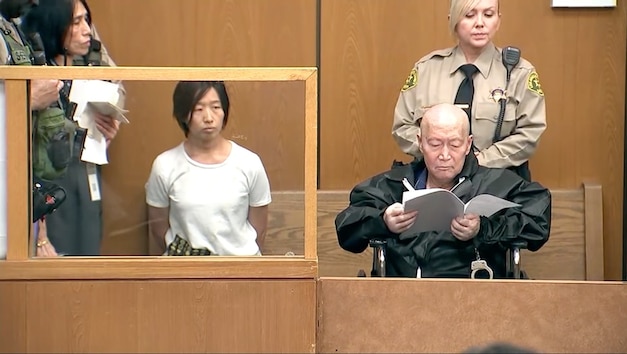

Smithsonian Secretary Lonnie Bunch resigns amid attacks from Trump administration

Secretary of the Smithsonian Institution Lonnie Bunch speaks during an event at the Smithsonian National Museum of American History on Feb. 20, 2026, in Washington, DC. (Anna Moneymaker/Getty Images)

(WASHINGTON) -- Smithsonian Secretary Lonnie Bunch is stepping down from his position, the institution said Tuesday, after seven years of leading the world's largest museum, education and research complex.

"I have fought for as long as I can. I love this country and I love the Smithsonian and I will always work to defend our more perfect Union," Bunch told ABC News in a statement, confirming his resignation on Tuesday.

Bunch’s resignation comes amid mounting attacks against the Smithsonian from the Trump administration, which has accused Smithsonian leadership of presenting a “radical view” of American history and threatening to withhold federal funds and support.

“It is with very mixed emotions and heartfelt gratitude that I announce my retirement from the Smithsonian,” Bunch said in a statement. “I have spent nearly half of my life working at and being part of the Smithsonian family, and what a privilege it has been. There is no place like the Smithsonian—it has been one of the great loves of my life, and I am extraordinarily proud of what we have accomplished together. I leave with pride and sadness, gratitude and joy, and with enormous confidence in the people who will carry this remarkable institution forward.”

Bunch, who has been a part of the Smithsonian Institution for the past 38 years, was named secretary in June 2019, making him the first African American and first historian to serve in the role. Bunch did not reference the ongoing attacks from the White House in his parting statement.

“It is time for my next chapter, a chapter that will allow me to continue to protect the integrity of the Smithsonian and to champion the importance of a history that illuminates and celebrates the complex story of our nation,” Bunch said. “The Smithsonian has been a reservoir of science, history, art and culture that freely allows the public to find knowledge, understanding, clarity, education, hope and a bit of joy. I will always carry the Smithsonian within me.”

Bunch reflected on his legacy in a July interview with ABC News to mark America's 250th birthday.

Asked about the White House's criticism of the Smithsonian, Bunch said, “I think that for me it’s -- I'm always open to any criticism, any comments. We want to be in the best institutions we can be."

He added, "But I feel very strongly that a nation has to understand the totality of its past, the complexity of its past, in order to understand greatness of a nation."

In July, the White House released a scathing 162-page report accusing the Smithsonian Institution of engaging in "extreme political activism" and presenting "a radical view of American history."

The report, which was published by the White House Domestic Policy Council, took aim at the Smithsonian's National Museum of American History (NMAH), accusing its leadership of adopting "an ideological framework that no longer treats the American story as a shared national inheritance to be taught or celebrated, but as a political instrument to divide, dispirit, and discourage our citizens."

The report came amid a review of the Smithsonian that was launched in response to President Donald Trump's March 27, 2025, executive order, "Restoring Truth and Sanity to American History."

The executive order directed Vice President J.D. Vance, in consultation with the president's advisers on domestic policy, "to remove improper ideology" from Smithsonian institutions, arguing that materials that cast America in a "negative light" have no place in federal cultural institutions.

Amid escalating attacks from the White House, NMAH Director Anthea Hartig became the first Smithsonian official in July to testify on the issue before Congress.

In her testimony, Hartig pushed back against the White House July 4 report, asserting that the museum "does not take sides" in political debates.

"Our work is governed by the Smithsonian standards of scholarship, accuracy, independence, and nonpartisanship," Hartig said in her opening remarks before a House Subcommittee on Delivering Government Efficiency. "The museum does not take sides in America's political debates. We preserve and document the evidence of American life in all of its breadth, so that the public can encounter the past and draw their own conclusions."

Bunch, who met with Trump at the White House last August, has repeatedly affirmed the Smithsonian's "independence" from political influence.

Referencing his conversations with Trump in a September 2025 letter to the institution's employees, Bunch underscored the independence of the Smithsonian, saying it was "paramount." He also told employees that the institution remains committed to telling the "American story" and "will always be, a place that welcomes all Americans and the world."

The Smithsonian is overseen by a 17-member governing body, known as the Board of Regents.

Franklin D. Raines, chair of the Board of Regents, said board members will announce an acting secretary as they begin a national search for Bunch's successor.

"I have had the honor of working with Lonnie Bunch for more than two decades, first when he was the founding director of the National Museum of African American History and Culture and ultimately when he became the 14th Secretary of the Smithsonian," Raines said in a statement on Tuesday. “I have seen firsthand how Secretary Bunch’s leadership of our 21 museums and the National Zoo has illuminated the nation’s past, opened pathways to new knowledge and powered creativity and innovation."

ABC News' Kyra Phillips and John Santucci contributed to this report.

Copyright © 2026, ABC Audio. All rights reserved.


Lindsay Clancy's attorney Kevin Reddington asks Trump for pardon after mistrial

Kevin Reddington appears on "Good Morning America," Sept. 8, 2026. (ABC News)

(NEW YORK) -- Lindsay Clancy's attorney Kevin Reddington said he is hopeful for an agreement between the defense and the district attorney after Clancy's trial ended last week in a hung jury.

Reddington also said he hopes President Donald Trump would consider a pardon for his client.

"Mr. President, I would hope that you would consider this young lady and the person she is, what she's been through, and consider a pardon," Reddington said Tuesday in an interview on "Good Morning America."

Clancy pleaded not guilty to three murder charges for the deaths of her 5-year-old daughter Cora, 3-year-old son Dawson and infant son Callan at the family's home in Duxbury, a Boston suburb, on Jan. 24, 2023.

Clancy's five-week trial ended in a mistrial on Sept. 4, after a jury failed to reach a unanimous verdict following over a week of deliberations.

When asked about the trial on the day the mistrial was declared, the president told reporters that he was following it, saying, "It's on television so much, it's hard not to follow it."

"Look, she did a horrible, horrible thing. Can't be worse," he said of Clancy. "But you'll find out what the price to pay is. There'll be a price. It's going to be mental institution or jail or something, but I guess they're going to go through another trial. It's too bad."

When asked for comment on Reddington's remarks, the White House pointed back to Trump's comments Friday. 

The president has broad authority to issue pardons and commutations, but the power is strictly limited to federal offenses. In her trial, Clancy faced state offenses in being charged with three counts of first-degree murder and was not convicted, therefore she is not eligible for a pardon by the president. Instead, she would need to appeal to state authorities in Massachusetts, according to the U.S. Department of Justice.

When it comes to the prospect of beginning a retrial for Clancy, Reddington said he hopes he and Plymouth County District Attorney Timothy Cruz are able to come to an agreement.

"He’s a very hard-charging prosecutor, a conservative gentleman," Reddington said of Cruz. "I hope however after sitting through this trial and seeing the evidence that was presented from the government as well as from the defense, that he would revisit that issue and hopefully would be able to work something out that would be acceptable to both sides."

In remarks on Sept. 4 after the mistrial was declared, Cruz declined to announce an immediate decision about retrying Clancy.

"I appreciate the fact that there are strong feelings and opinions tied to this case," Cruz said outside the courthouse. "However, our job is to set aside our feelings and focus solely on the facts. The facts are Lindsay Clancy killed her three children and the evidence suggested to us that she was in control of her actions when she committed those homicides."

The two sides are scheduled to be in court on Sept. 29 to determine next steps following the mistrial.

Reddington said he was "upset" with the mistrial because of information he said the jury foreperson provided about the lone juror holdout, whom Reddington has said was a male juror.

"He had agreed, according to the note from the forelady, that he had doubt but he would not present the law of reasonable doubt as presented by the judge," Reddington said. "That's not right and that's why I was upset."

Throughout Clancy's trial, much of the testimony centered on whether or not Clancy was suffering from postpartum psychosis -- considered a psychiatric emergency, according to the American College of Obstetricians and Gynecologists -- when she strangled her children and attempted to take her own life, and whether she should be held criminally liable for the killings.

Jurors in Massachusetts are instructed that in order to prove a defendant is criminally responsible for their conduct, prosecutors must "prove beyond a reasonable doubt that the defendant did not suffer from a mental disease or defect at the time of the alleged offense," according to the Massachusetts Court System.

Reddington said that critics who call the so-called insanity defense a rationalization don't understand what he says Clancy went through.

"These people don't understand," he said. "They don't know what she went through. They didn't see her text messages. They didn't see her journal. They didn't see the notes that she wrote."

He continued, "She reached out to everybody and anybody that would listen to it and kept saying, 'I am not good. I am not well,' and it wasn't good."

If you or someone you know is struggling with thoughts of suicide, call or text 988 or chat 988lifeline.org. Free, confidential help is available 24 hours a day, 7 days a week. You are not on your own.

Copyright © 2026, ABC Audio. All rights reserved.

Man arrested after incident with Ohio Democratic gubernatorial nominee, police say

Mahoning County Sheriff's Office.

A 38-year-old Ohio man was arrested Sunday after allegedly "pushing his way" through a crowd at a fair where Amy Acton, the Democratic gubernatorial nominee in Ohio, was speaking, according to authorities.

The suspect, identified by police as Patrick Havas, allegedly knocked two people to the ground before being taken into custody, according to the Mahoning County Sheriff's Office.

"After his arrest, two handguns and a set of 'brass knuckles' were recovered," a sheriff's office spokesperson said in a statement Sunday. "Investigators say no weapons were ever brandished or even removed from their holsters."

The Ohio State Highway Patrol said in a later statement that Havas was booked at the Mahoning County Jail on charges of disorderly conduct and two counts of assault.

Acton was not harmed, according to the OSHP, members of whom were with Acton at the time as part of her protective unit.

The alleged incident took place at the Canfield Fair in Canfield, Ohio, located near Acton's hometown of Youngstown, around 60 miles outside of Cleveland.

"Dr. Acton and Eric are grateful for the swift and decisive action of law enforcement and are praying for the recovery of those injured," Addie Bullock, Acton's campaign spokesperson, said in a statement Sunday, referring to Acton's husband. "This kind of violence has no place in Ohio. Dr. Acton will always stand up to the chaos, hate and vitriol that pits us against one another."

Ohio Gov. Mike DeWine said in a statement earlier Sunday that the alleged incident occurred when a "man tried to forcefully push himself toward Dr. Acton as she was speaking and injured other attendees at the Mahoning County Democrat booth."

"Violence or the threat of violence at political or public events is always unacceptable," DeWine said in a statement on social media Sunday, adding that he and his wife spoke with Acton and "she said to share with Ohioans that she is ok."

"This case is now in the hands of law enforcement and will be investigated thoroughly," DeWine said.

Acton previously served under DeWine when he appointed her as director of the Ohio Department of Health in 2019.

She is now running for governor in the November general election against Republican nominee Vivek Ramaswamy, whose campaign also issued a statement Sunday.

"Candidates should be able to meet with voters without having to worry about threats or violence," Ramaswamy's communications director Connie Luck said in a statement. "What happened today is completely unacceptable and has no place in politics, and we hope that no one was hurt."

Ramaswamy was also scheduled to appear at the Canfield Fair Sunday afternoon. His campaign did not immediately respond to questions from ABC News about whether the event took place. 

Copyright © 2026, ABC Audio. All rights reserved.


Weather

Visitor Polls

When you were a kid, how did you feel about going back to school?
Add a Comment
(Fields are Optional)

Your email address is never published.